


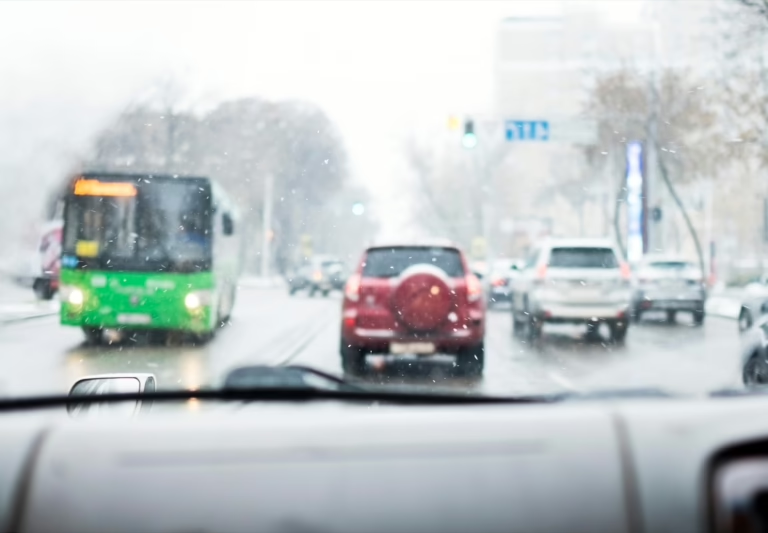
Winter driving already puts everyone on edge. Between icy roads, packed parking lots, freezing temperatures, and the sun tapping out at 4:30 PM, it’s the season where cars take more abuse than usual.
When you’re juggling snow tires, defrost cycles, holiday errands, and a hundred other winter tasks, a small dent on your vehicle can feel like the least important issue on your list.
Here’s the wild part, though: winter is exactly the season when dents become a bigger problem faster. Cold temperatures, constant moisture, and corrosive road salt all work together in ways that can take a minor dent and push it toward more serious damage before you even notice what’s happening.
Even if the dent looks harmless now, winter conditions change how your car responds—and how that damage ages.
Cold Air Makes Metal Less Flexible
Your car’s metal panels don’t stay the same year-round. They expand slightly in the heat and contract as temperatures drop. In winter, when the air is cold and dry, metal becomes noticeably stiffer. A dent that barely shifted in warmer weather becomes far more rigid once freezing temperatures settle in.
That change makes the surrounding area more vulnerable. Pressure points created by the dent can crack more easily. Older dents with tiny imperfections around the edges can worsen as the cold tightens the metal.
And if your car takes another impact—whether it’s a door hitting the same spot or a low-speed winter slip—the damage can expand far more dramatically than it would in summer.
Cold weather simply makes metal less forgiving. A dent that would’ve been an easy fix in October can become deeper, sharper, and more complex by January.
Moisture Works Its Way Into Weak Spots
Winter is relentless when it comes to moisture. Snow melts, refreezes, melts again, and keeps pooling in every nook of your car’s exterior. If you have a dent—especially one with even a microscopic paint crack—moisture can slip underneath the surface.
Once water gets into a compromised area, it doesn’t just sit there. It freezes overnight, expands, and slowly pushes against the layers of paint or protective coating.
When temperatures warm up again, it melts and settles deeper. Then it repeats the freeze-thaw cycle the next night.
Over time, this process causes paint to bubble, peel, or separate from the metal underneath. Even if the dent still looks small from the outside, the underlying structure is weakening. Winter fast-tracks that deterioration in a way most drivers never see coming.
Road Salt Speeds Up the Damage
Road salt is necessary for safety, but it’s absolutely brutal on damaged paint and exposed metal. When salt mixes with melted snow, it creates a slushy, corrosive film that sticks to your car’s lower panels and finds its way into dents.
If the dent has any unprotected metal or compromised coating, salt accelerates corrosion. And since winter driving constantly splashes more salt onto your car, the damage keeps compounding. A dent you could’ve ignored for months in spring becomes a hotspot for long-term exterior issues in winter.
Corrosion doesn’t fix itself. Once it starts working under the paint, it spreads—sometimes quietly, with no visible signs until it’s already gotten worse.
Winter Conditions Increase Your Safety Risks
A dent may seem purely cosmetic, but in winter it can affect your driving experience more than you’d expect. Cold weather already reduces visibility, makes roads unpredictable, and increases the chances of minor accidents. A compromised panel doesn’t help.
For starters, dents near body lines or edges can distort how headlights or snow reflect across the car. A weakened panel also becomes far less resistant to low-speed impacts. If your car slides on ice, bumps a curb, or taps another vehicle in a parking lot, a damaged panel is more likely to crack or deform further.
There’s also the issue of sensors. Modern cars rely heavily on exterior sensors around the bumpers and side panels. A dent in the wrong spot can shift or interfere with these systems, giving inaccurate proximity readings just when you need them most.
In short: dents don’t just look bad. They make winter driving slightly riskier in ways people rarely think about.
Why Paintless Dent Repair Works So Well in Winter
Paintless dent repair (PDR) is one of the best repair methods during winter because it avoids all the complications that come with traditional bodywork. There’s no sanding, no filler, no paint curing, and no color matching under weird winter light.
Instead, technicians gently reshape the dent from behind the panel to restore the original contour.
The biggest perk? The repair protects your car immediately. By fixing the dent before moisture and salt start doing their worst, you’re sealing off vulnerable areas and stopping damage before it spreads. PDR also comes with a faster turnaround, which is ideal during a season when nobody wants to be without their car for long.
Plus, winter is already expensive—travel, heating bills, gifts—so choosing a repair that’s efficient and cost-friendly is a pretty easy win.
Winter is already chaotic enough without adding a body shop saga on top. Dent Shop’s process is built around making repairs quick and stress-free. You get straightforward communication, expert technicians familiar with winter-related damage, and efficient PDR work designed to preserve your factory finish.
The goal is simple: fix the dent cleanly, protect the car from seasonal damage, and get you back on the road fast—no drama, no complicated repairs, no surprise issues when spring rolls around.
Frequently Asked Questions About Winter Dent Repair
Does cold weather make existing dents worse?
Yes. Cold temps make metal less flexible and more prone to cracking, especially around pressure points.
Can moisture really get under the paint?
If there’s even a tiny fracture, moisture can slip underneath, freeze, expand, and cause more damage.
Is Paintless Dent Repair safe in winter?
Absolutely. It’s one of the best repair options for cold weather because it avoids sanding or paint curing.
How long does a typical Paintless Dent Repair take?
Most repairs are completed same-day, depending on dent size and location.
Should I fix dents before holiday travel?
Yeah—especially if you’re driving in snowy or icy areas. A compromised panel is more vulnerable during winter commutes.
How Dent Shop Makes Winter Repairs Simple
Dents aren’t always urgent in warm weather, but winter changes the rules. Cold temperatures stiffen metal, moisture sneaks into weak spots, and road salt speeds up corrosion. What starts as a small cosmetic issue can turn into a more expensive repair if it’s left to ride out the season.
Addressing dents now keeps your car safer, stronger, and better protected as winter ramps up. And with a fast, noninvasive option like paintless dent repair, it’s one of the easiest fixes you can tackle before conditions get worse.
If you’ve spotted new damage—or you’ve been ignoring an old dent hoping it’ll magically fix itself—now’s the perfect time to get it handled. Dent Shop is ready when you are.
Schedule Your Free Estimate Today
📍 Visit us at: Dent Shop Ashburn, 21670 Red Rum Drive, Suite 154, Ashburn, VA 20147
📞 Call: 571-293-2129
© 2025 Dent Shop.
All rights reserved.